Written by: Linda Chen
Last updated: August 19th, 2026
Lower Mainland summers are beautiful, but they come with a weird paradox. You wake up enjoying a crisp, cool morning breeze, but by mid-afternoon, you are absolutely melting into your sofa.
If you live anywhere in Langley, Surrey, Delta, Coquitlam, Burnaby, or Squamish, you know this feeling all too well. When those sudden 30°C heatwaves strike, our first instinct is to crank up the air conditioning to stay comfortable.
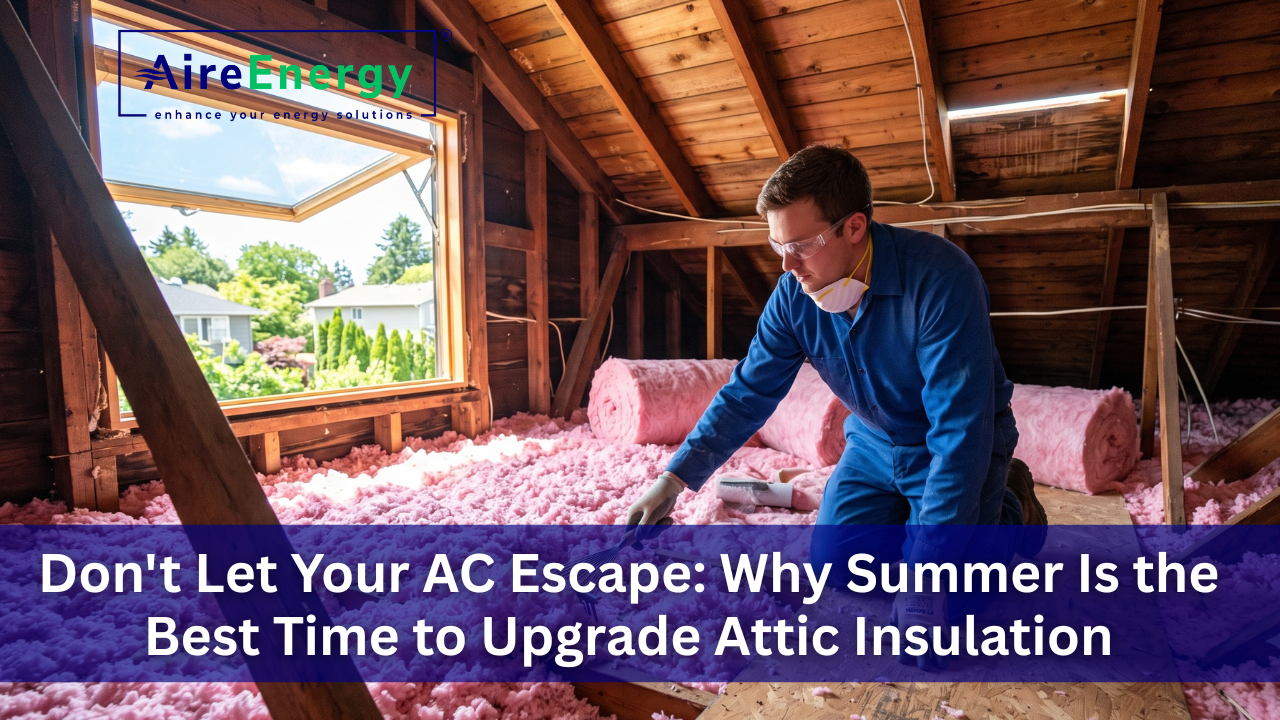
But here is the catch: if your attic is poorly insulated, you are practically throwing money out the window. The cold air you are paying for escapes right through your ceiling, leaving your cooling system to struggle and your energy bills to skyrocket.
The Attic “Pizza Oven” Effect
To understand why your home gets so sweltering, you have to look at how heat moves.
- The Solar Trap: Your roof shingles sit under direct sunlight for eight or more hours every day, acting like a giant frying pan.
- The Heat Spike: While it might be 25°C or 30°C outside, a poorly ventilated attic can easily climb to a scorching 55°C or 65°C.
- The Downward Push: This trapped, superheated air has only one way to go: straight down into your bedrooms and living spaces. Heat transfers through conduction (moving through wood framing), convection (sneaking through ceiling leaks), and radiation (beaming off the hot roof deck).
- The Cooling War: Your ceiling becomes a massive radiator. Your air conditioner has to run constantly to fight this downward heat push, which wears out your expensive HVAC equipment years ahead of schedule.
In fact, home performance experts estimate that simple air leaks and poor insulation account for 25% to 40% of a home’s total energy loss.
Why Summer is the Smartest Time to Upgrade
Most homeowners do not think about insulation until the first winter freeze hits. But honestly, tackling this project in the summer is a major strategic win :
- Skip the Autumn Rush: Come fall, everyone panics and tries to book insulation upgrades before winter. Booking in the summer means faster service, flexible scheduling, and no massive waitlists.
- Perfect, Dry Weather: British Columbia winters are notoriously wet. Dry summer conditions mean installers can move materials in and out of your home without worrying about dragging in rain, mud, or dampness.
- Instant Utility Relief: You do not have to wait months to see a return on your investment. The moment the new thermal barrier is installed, your home stops absorbing attic heat, and your AC bills drop immediately—often by 15% to 30%.
- Winter Readiness: By the time the cold, damp seasonal rain eventually sets in, your home is already fully sealed and insulated, keeping your expensive furnace heat trapped inside.
Cellulose vs. Fiberglass: The Honest Breakdown
What is the right material for your attic floor? You will usually choose between two highly effective loose-fill options :
Blown-In Cellulose
- What it is: Made from up to 85% recycled paper, primarily newsprint, which is treated with natural borates to resist fire, pests, and mold.
- The Perks: It has a higher thermal rating (R-3.2 to R-3.8 per inch) and is incredibly dense. It flows into weird attic corners and joist gaps like flour filling a measuring cup, creating a fantastic air seal.
- The Catch: It is organic, so it can settle by about 20% over its lifetime and can absorb moisture if your roof ever develops a leak.
Blown-In Fiberglass
- What it is: Spun glass fibers that are entirely inorganic, meaning pests do not like it and it naturally resists fire and water.
- The Perks: It is exceptionally lightweight, which keeps pressure off your ceiling drywall. It never settles, meaning its performance lasts forever. It is also highly cost-effective and can be blown directly over clean, existing insulation.
- The Catch: It has a slightly lower R-value per inch (R-2.2 to R-2.7).
The Real-World Target: What R-Value Do You Need?
R-value is just a number that tells you how well a material stops heat from moving.
Under the British Columbia Building Code, homes in Climate Zone 4 (which includes Metro Vancouver and the coastal areas) require a minimum attic rating of about R-40. But if you want real comfort and protection from our damp, unpredictable weather, local experts recommend aiming for R-50 or R-60.
Here is the reality: many older homes across the Lower Mainland only have about R-20 insulation. If you stick your head up into your attic and can see your wooden floor joists, you are severely under-insulated and wasting money every single day.
Air Sealing and Ventilation: The Two Secrets to Success
Simply blowing new material into an attic will not solve your issues if your roof cannot breathe. A proper professional upgrade requires two crucial steps:
- Air Sealing First: Installers must go in first and plug up every tiny crack, plumbing pipe, and light fixture penetration. Otherwise, hot air just leaks right through the insulation.
- Keeping the Vents Clear: Your attic needs a steady stream of air coming in through the soffits and escaping out the roof vents. If the insulation blocks those soffits, you will end up with trapped moisture, condensation, and structural mold.
- Baffles are Key: Installers must place plastic or cardboard baffles in every joist bay. This leaves a clear 2.5-inch airway directly above the insulation line so fresh air can cycle through safely.
How to Get Free Money: CleanBC & Utility Rebates
To make energy upgrades more accessible, the Province of BC, BC Hydro, and FortisBC offer excellent financial incentives.
- Standard Insulation Rebates: You can get up to $900 back for adding attic insulation, provided you add at least R-12 of new material.
- Income-Qualified Program: Depending on your household size and combined income, you could qualify for enhanced rebates that cover 60% to 95% of the total installation cost, up to a maximum of $2,000 for attic upgrades.
- The Multi-Upgrade Bonus: If you combine your insulation with another eligible upgrade—like switching from a fossil-fuel furnace to an energy-efficient electric heat pump—you can secure additional bonuses ranging from $300 to $2,000.
- The Golden Rule: To get any of these rebates, the work must be completed by a licensed member of the Home Performance Contractor Network (HPCN). Self-installations are not eligible.
Beat the Heat with AireEnergy
Upgrading your attic insulation is one of the easiest ways to slash your power bills, protect your HVAC system, and enjoy a truly comfortable home all year round.
If you are located in the Greater Vancouver Area—including Richmond, Vancouver, Langley, Surrey, Delta, Coquitlam, Burnaby, or Squamish—AireEnergy is your trusted local partner.
Operating out of Richmond (13980 Maycrest Way #113, Richmond, BC V6V 3C2), AireEnergy is a highly rated Lennox dealer accredited by the Better Business Bureau, HomeStars, and ReviewBuzz. Their certified technicians bring over ten years of hands-on local experience, premium materials, and transparent, upfront pricing. Plus, they will handle the confusing CleanBC rebate paperwork for you so you can maximize your savings effortlessly.
Do not spend another summer letting your expensive air conditioning float away through your roof. Call the friendly team at AireEnergy today at 1-855-847-7892 to schedule your professional, hassle-free attic inspection!
